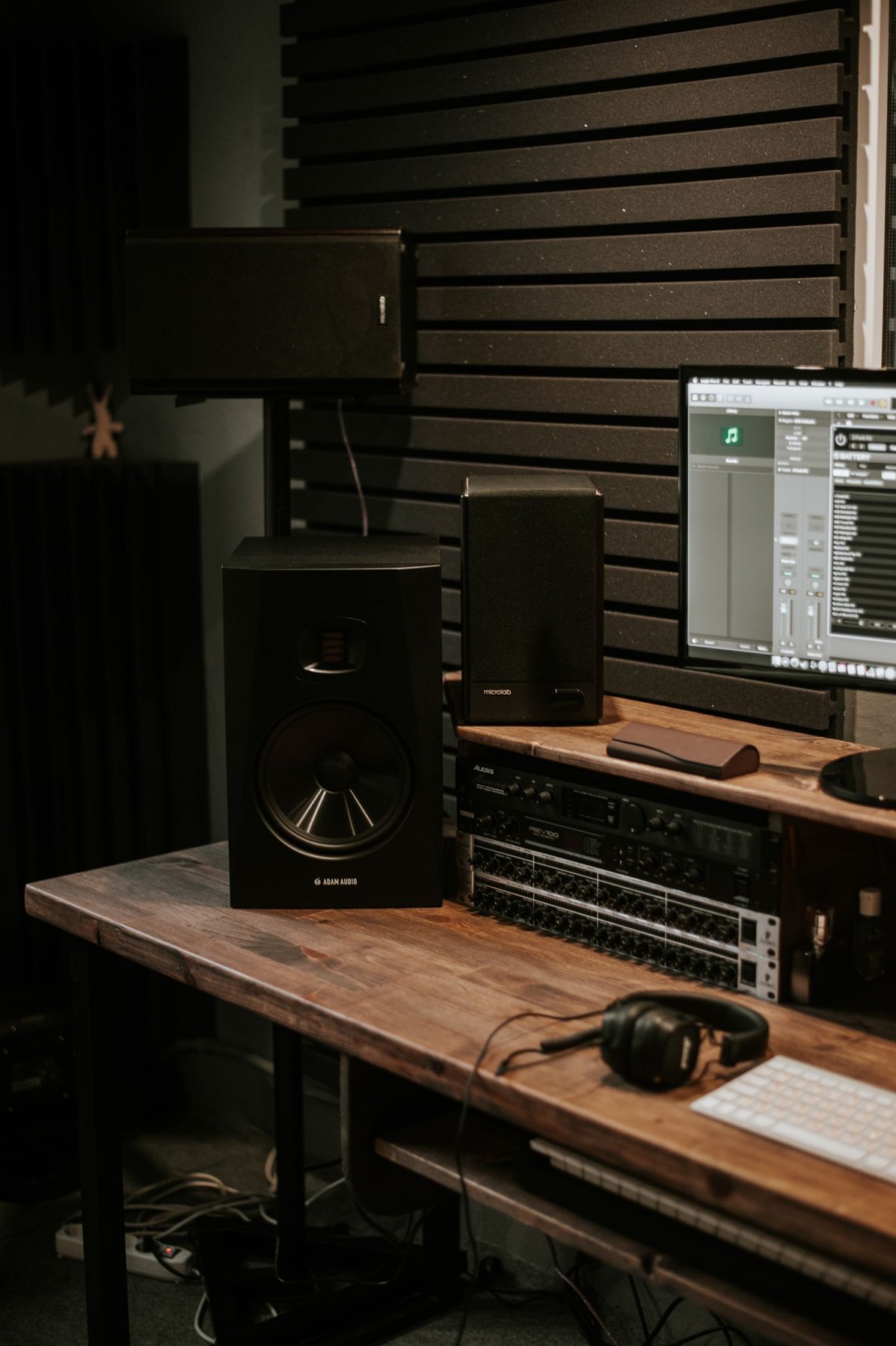
On a crowded desk, speakers are often placed wherever their cabinets fit. That can leave one behind a monitor and the other beside a wall, with neither aimed toward the listener. Before buying smaller speakers or adding accessories, clear enough space to try a deliberate arrangement.
Sit where you normally work and identify the left and right positions relative to that seat. Genelec's monitor-placement guidance emphasizes aiming speakers toward the listening position and considering the room. You do not need to turn a home desk into a studio to apply the basic question: is the sound reaching you directly, or are desk objects obstructing it?
Measure the cabinets and their connections
Include the cable plugs and any required clearance behind each speaker. A cabinet may fit on a shelf while its input plug does not. Keep ventilation openings and any manufacturer-specified space clear. Do not wedge a speaker tightly between a wall and monitor merely because its front face remains visible.
If you use stands or angled supports, check their load capacity and stability with the actual speakers. A raised speaker should not become easier to knock over when reaching for a notebook. Avoid improvised stacks of loose objects, especially near the desk edge.
Change one thing while listening
Use a familiar spoken recording and a familiar piece of music at a moderate level. Move one element of the arrangement at a time, then compare. This makes it easier to identify whether an improvement came from clearing an obstruction, changing the angle or moving the listening position.
Listen from the chair rather than leaning forward over the keyboard. Check whether one side seems much more prominent because the speakers sit at very different distances. The room and desk remain part of the result, so a product specification alone cannot describe how the arrangement will sound.
Keep the controls reachable
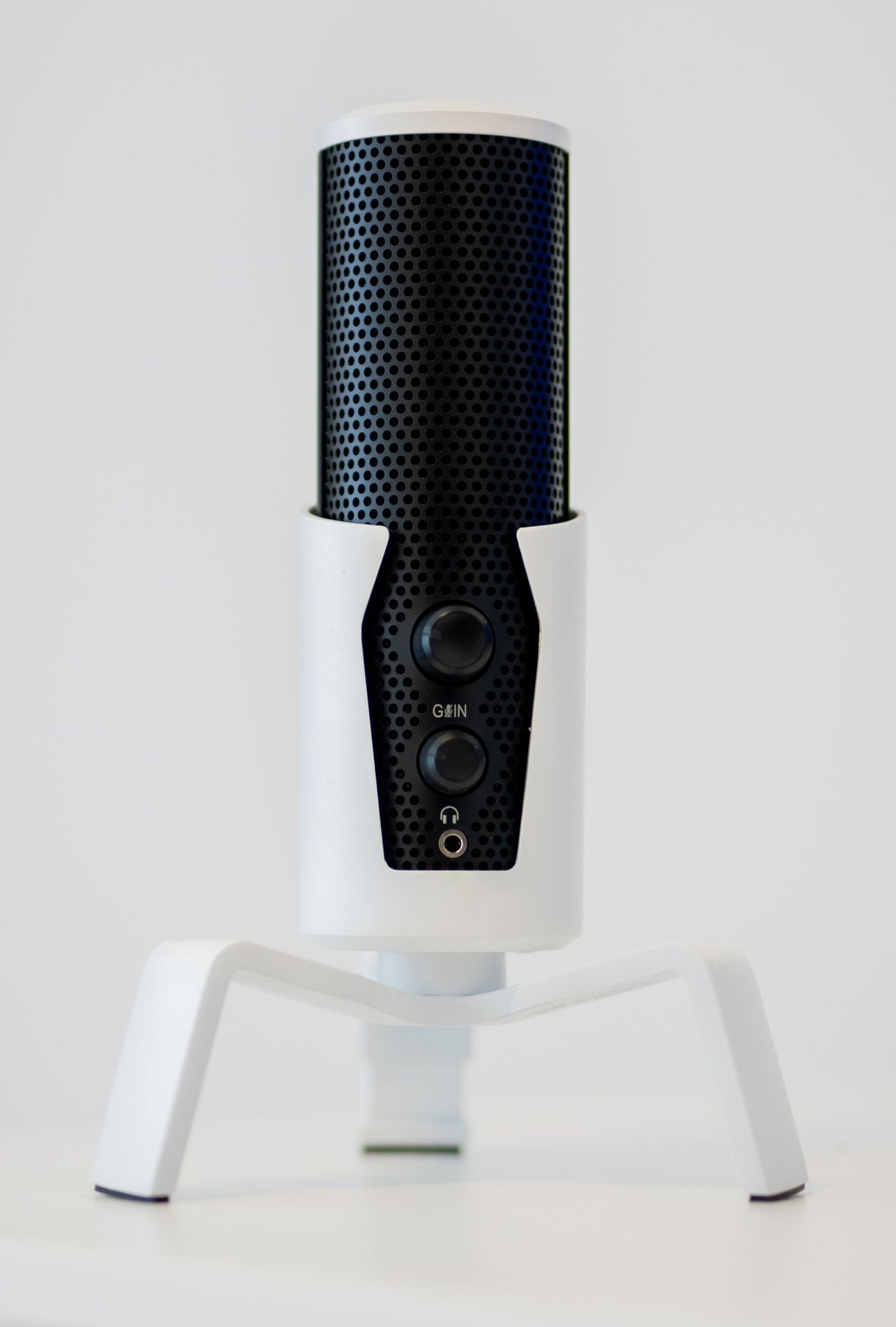
Place the volume control where it can be adjusted without reaching behind the display. Route leads so moving the monitor or laptop does not pull a speaker. If the speakers share the desk with a microphone, make a test call using the intended output level and listen for unwanted echo; headphones may be preferable during that task.
If there is no stable, unobstructed place for two cabinets, reconsider their size or use a different listening arrangement. Smaller equipment in a workable position can serve the desk better than larger speakers hidden behind everything else.