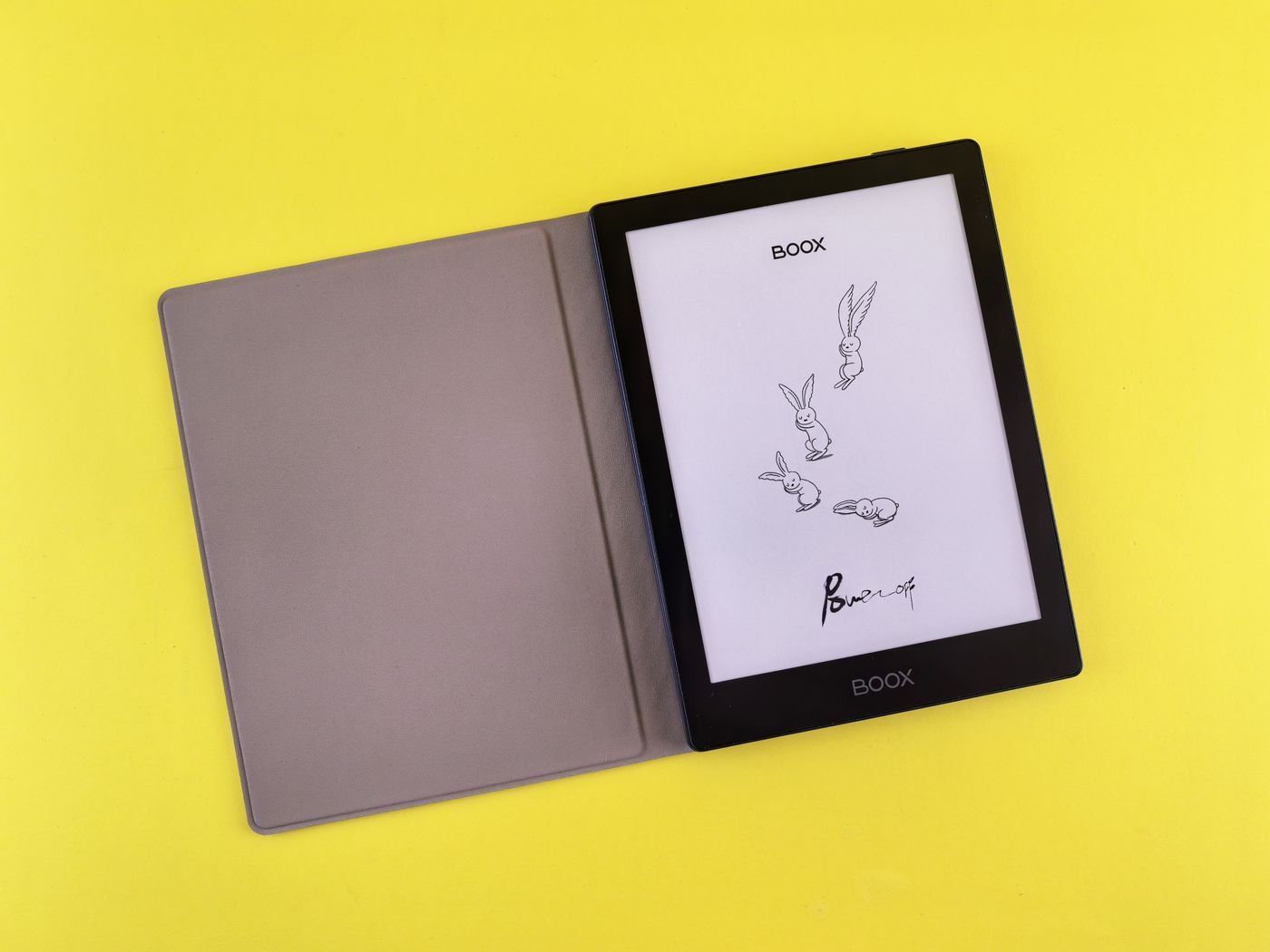
Set the reader on the table where you usually read and estimate the angle that lets you see the page without constantly moving the device. A case advertised as a stand may offer only one angle, or may work in only one orientation. Check those details before choosing it for table use.
Identify the exact reader model and generation. Cases can look nearly identical while placing a power button, charging port or magnetic closure differently. Use the case maker's compatibility list, and include any screen protector or grip already attached when considering the fit.
The stand should remain stable when you turn a page. Try a normal tap near the edge and reach any physical buttons. If the case folds under light pressure or forces you to hold it with your other hand, it is not providing the hands-free arrangement you wanted.
Allow space around the device
Check the footprint of the folded case, not just its closed dimensions. It may extend behind the reader into the space needed for a cup, keyboard or notebook. Keep liquids separately positioned so reaching for a drink does not pass over the screen.
Look at the charging cable's exit direction. A plug at the lower edge may need clearance when the reader is propped up. Do not balance the device on the connector or sharply bend the cable to maintain the viewing angle. Another stand position may be more appropriate while charging.
If you read beside paper notes, make sure the case leaves enough room to write. A stand that occupies most of a small table can undermine the reason you wanted the reader upright. Test the whole arrangement with the notebook open.
Keep the carrying role in view
Close the case and check that it protects the screen without pressing objects against it. Consider how much weight the stand structure adds when you hold the reader away from the table. A separate stand and a simple sleeve can be worth comparing if the device spends very different parts of the day in your hand and on a desk.
Choose the arrangement that supports both routines with the fewest awkward adjustments. A clever folding mechanism is useful only when you can set it up consistently and it holds the angle you actually use.