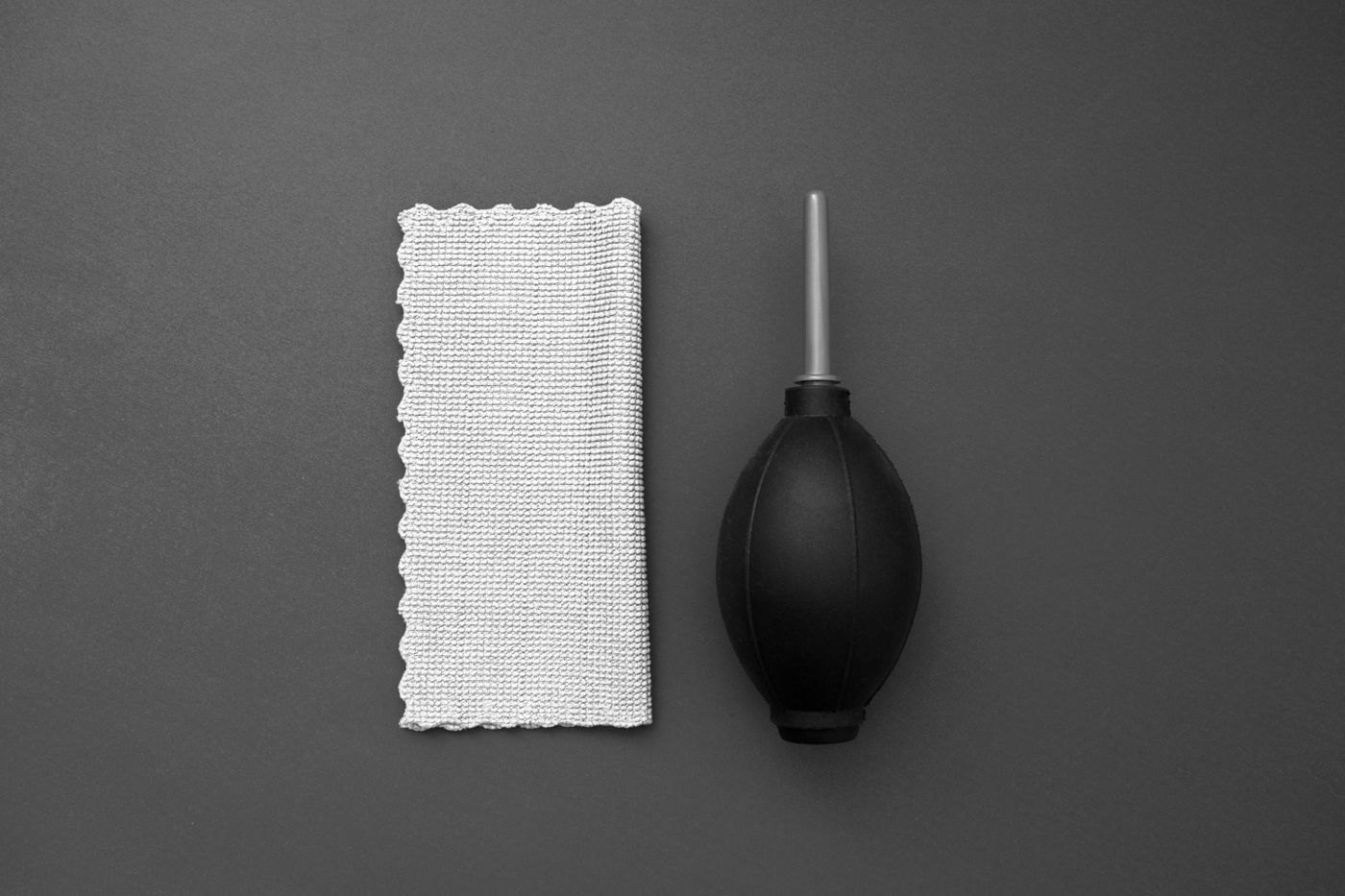
Find the care section for the lens or camera you own. Cleaning instructions can differ between surfaces and coatings, so a product advertised for screens, eyeglasses or general household use is not automatically suitable. Make a shopping list from the approved materials rather than buying the largest kit with the most tools.
Nikon's P1100 instructions, for example, distinguish blowing away loose dust from removing a remaining mark with an appropriate cloth. The useful principle is to identify the surface and the manufacturer's method before touching it. Do not turn instructions for an exposed front element into permission to clean a sensor or an internal optical surface.
Keep the cleaning tools clean
Store a lens cloth in its own protected pouch. A cloth carried loose with sandy equipment can bring grit to the very surface you want to clean. Separate it from a cloth used on the camera body or bag. Replace or clean materials according to their instructions rather than continuing to use an obviously contaminated tool.
Check whether a liquid cleaner is approved for the intended surface and how it should be applied. Do not spray unknown products directly into an assembled camera. Avoid improvised mixtures and tools whose purpose you cannot identify. A minimal kit you understand is easier to use correctly than a collection of unfamiliar swabs and brushes.
Decide whether cleaning is needed
Inspect in good light before acting. A mark on a removable protective filter, a front lens element and an image sensor require different responses. If you cannot locate the issue or reach it through the manufacturer's normal user-care procedure, use an authorized service route instead of dismantling the equipment.
Set the camera on a clean, stable surface and work without rushing. Keep caps nearby so cleaned surfaces can be protected again. Do not clean during a lens change in a dusty environment merely because the kit is in your pocket; moving to a suitable place may be the better first action.
Afterwards, store the tools separately from dirty accessories and review a normal photograph if you were investigating an image problem. Persistent marks are a reason to reconsider their source. Repeated rubbing is not a diagnosis, and a cleaning kit should never become an excuse to keep applying pressure to an unexplained defect.