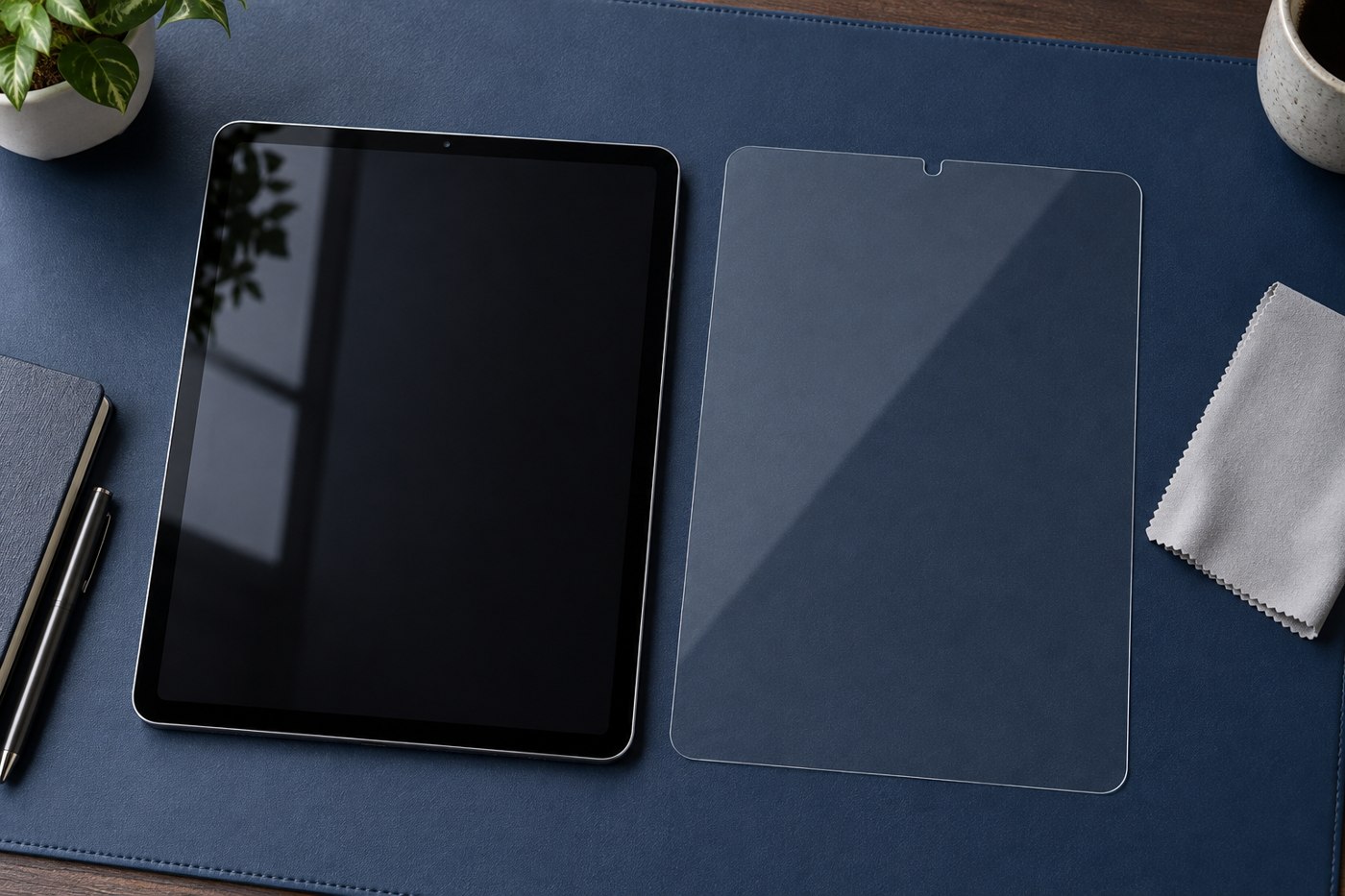
A tablet used mainly for handwritten notes raises different questions from one used for viewing photographs. A protector can change the feel of a pen or finger and the way the display looks. Before choosing a finish, identify whether you are trying to address surface wear, reflections, pen feel or privacy.
Check the exact model and screen dimensions, including camera and sensor cutouts. Two tablets with similar screen sizes can have different front layouts. If you already use a case, look for information about how the protector fits inside its edge rather than assuming that separately compatible products fit together.
Compare the surface with your own material
Where possible, examine text, a dark photograph and a handwritten line through the type of surface you are considering. A shop demonstration using only a bright home screen may not reveal the characteristic that matters during your work.
Descriptions such as paper-like or crystal-clear are product language, not a measurement of how the screen will feel to you. Look for a clear explanation of the material, finish and intended use. If reviews discuss pen tips, confirm which pen and protector combination was involved before applying that experience to yours.
Privacy products require an additional check: the viewing directions and orientation they are designed for. A tablet used in portrait and landscape may present different requirements. Read the maker's description instead of assuming the same effect from every angle.
Plan installation and future removal
Follow the supplied installation method and prepare the surface using the tablet and accessory makers' guidance. Check whether an alignment frame is included and whether the instructions assume the case has been removed. Keep the work area clear enough that you can place the device down without trapping debris underneath it.
Do not try to solve a badly aligned product by repeatedly forcing the case over its edge. If the fit is wrong, establish whether the selected model is correct and use the seller's support or return process.
A removable surface may suit someone who alternates between drawing and image viewing, but investigate how it attaches and where it is stored when removed. A loose sheet in a crowded bag creates another item to protect. The useful choice is the one that supports the tablet's main job without adding an awkward changeover to every session.