Begin with the day you are preparing for. A phone used for occasional messages has a different demand from a tablet running a long presentation or a laptop used between appointments. List the devices and the tasks that cannot wait until you reach an outlet.
Look at your own recent battery use as context, without treating one day's percentage as a guaranteed prediction. Travel, applications and device condition can change the result. The purpose is to avoid choosing a power bank entirely from the largest number in a product title.
Check energy and output separately
Read the bank's capacity information, including its watt-hour rating where provided. Then check the output capability for the device you intend to charge. A larger capacity does not automatically mean the bank supports the laptop's required charging arrangement.
Use the device maker's charging guidance and the power bank's specifications together. Include the cable's supported role and power capability. If several devices will share the bank, read the output allocation for that combination instead of adding up single-port claims.
Consider how it will be carried during use
Measure the space in the bag or pocket where the bank will sit. Include the connected cable and its bend near the plug. A heavy bank hanging from a short lead is not a useful arrangement simply because the total kit fits into a bag when disconnected.
Keep the equipment in conditions allowed by the maker, including ventilation and temperature guidance. Do not assume a closed fabric compartment is an appropriate place for operating charging equipment. Check the instructions before deciding how to carry it while it is connected.
Make the kit ready before leaving
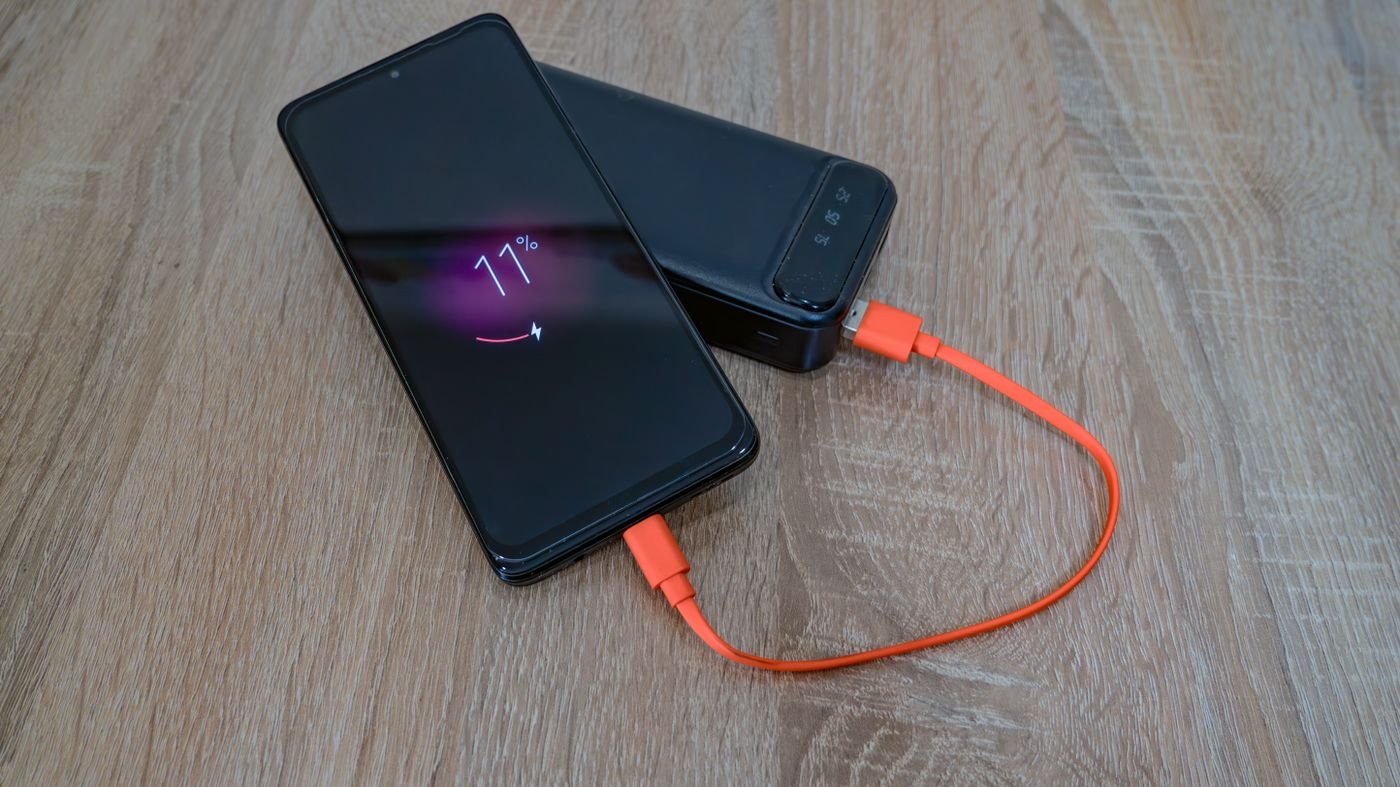
Charge the power bank according to its instructions and test it with the actual device and cable. Check how its indicator reports remaining charge so you understand what it can tell you. A small light pattern should not be treated as a precise energy measurement unless the maker describes it that way.
For air travel, verify the current airline and aviation-authority requirements for the bank's stated rating, packing and onboard use. A retailer's travel-friendly phrase does not establish permission for your itinerary.
The right size is the one that supports the planned task and still gets carried. A slightly smaller verified kit can be more useful than a large bank routinely left at home, while a demanding laptop task may justify the additional weight.